
Project at a glance
Why a biochemical plant chose a packaged firetube boiler
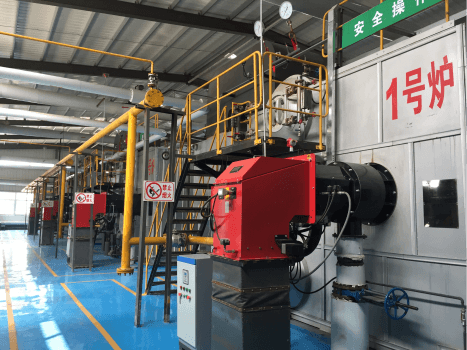
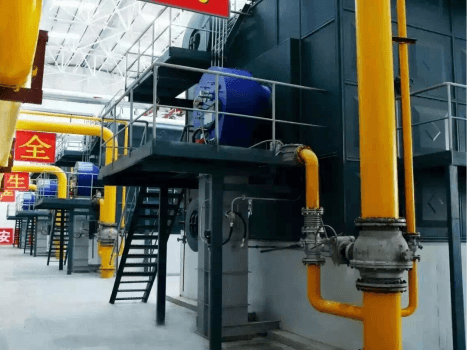
Biopharmaceutical and fermentation-extraction lines make strict demands on saturated steam: pressure must hold within ±0.05 MPa, condensate must stay clean, and a boiler cannot trip in the middle of a fermentation batch. Derui’s new line required a unit that could ride 24-hour demand swings, connect directly to the plant’s existing natural-gas grid, and fit inside a new boiler room that had already been built to the equipment footprint. The WNS packaged firetube solution — boiler body, burner, control cabinet and feedwater pump skid pre-assembled and pre-commissioned in our factory — was the fastest way to meet all three without a long on-site assembly schedule.
Step 1 — Foundation pouring
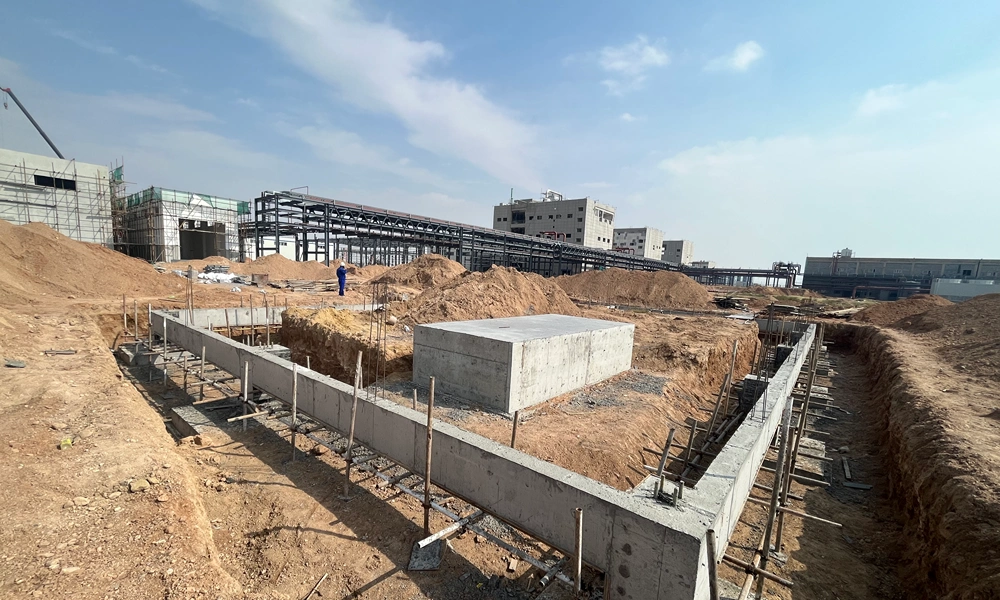
Before the boiler arrives, we issue the client with a foundation drawing specifying anchor-bolt positions, static load and seismic requirements. The concrete slab on this site was poured strictly to our drawing — not to the client’s estimate.
Step 2 — Boiler and auxiliaries arrive on the flatbed
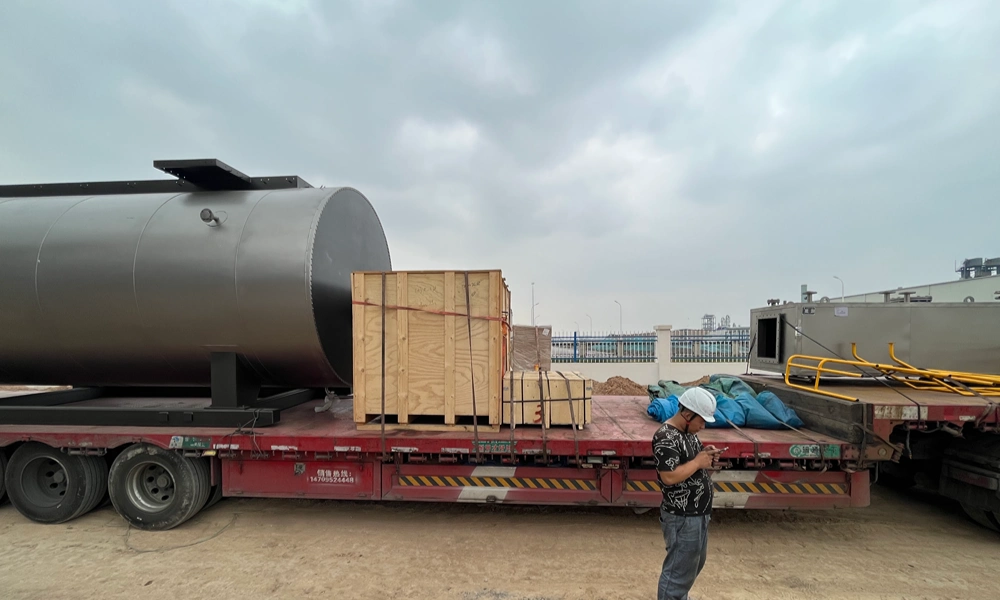
The boiler body, burner, valves and control cabinet are shipped as one package. Before loading, every flange opening is blind-flanged and capped against rain and dust — across the road from Hebei to Inner Mongolia, no sandstorm or shower reaches the pressure part.
Step 3 — Setting the body and connecting the piping
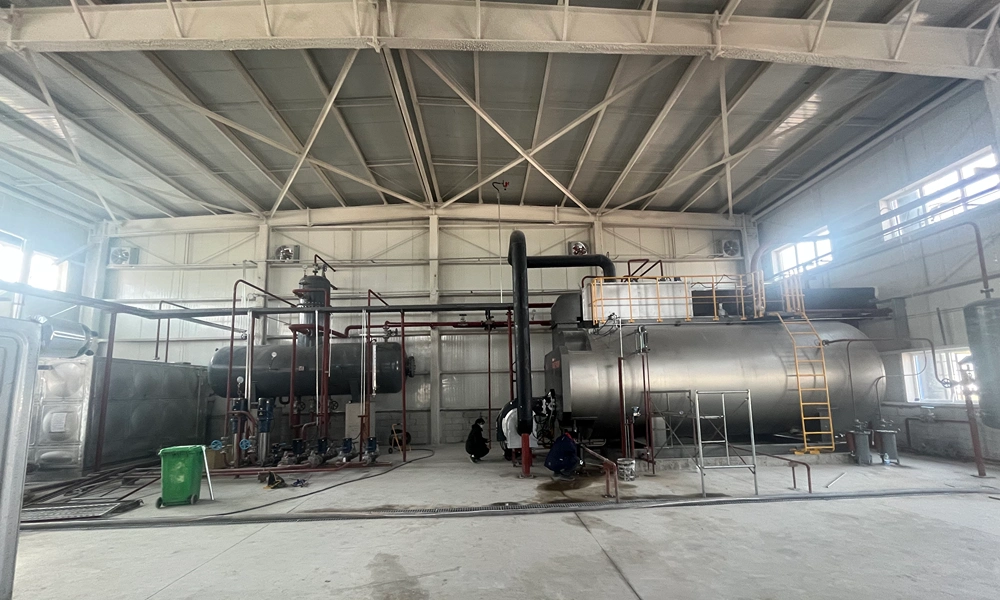
The body is set on the foundation, the feedwater pump skid and water tank are aligned, and the steam, feedwater, blowdown and gas-supply lines are connected in one pass by our installation crew.
Step 4 — Piping and valves, run by hand
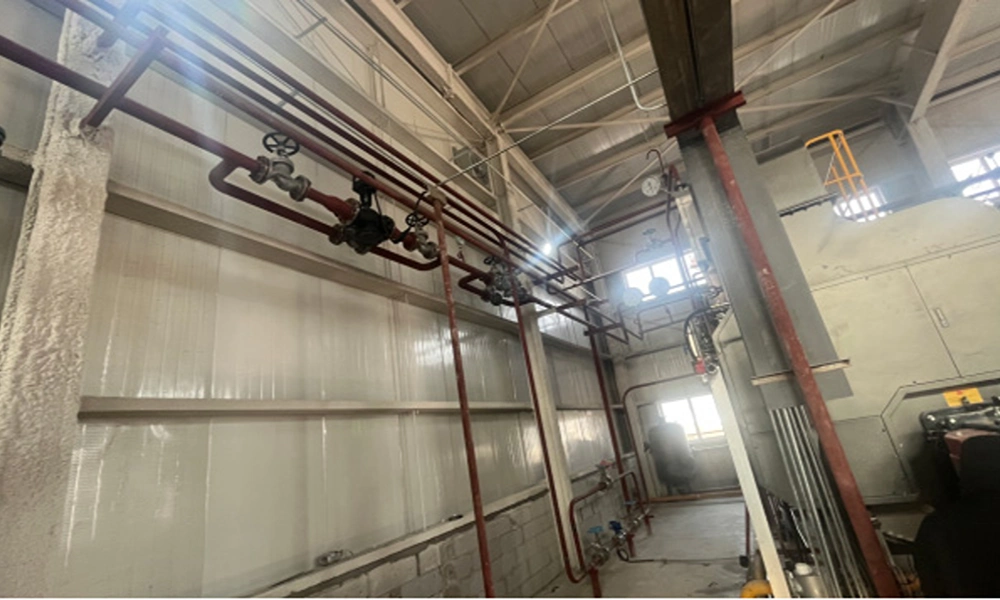
Steam lines are sloped for proper condensate drainage, valves are grouped at the point where the operator actually stands, and pressure gauges are mounted at eye level — not just where the drawing says they should go, but where the operator can read them.
Step 5 — Control cabinet: Siemens LMV50
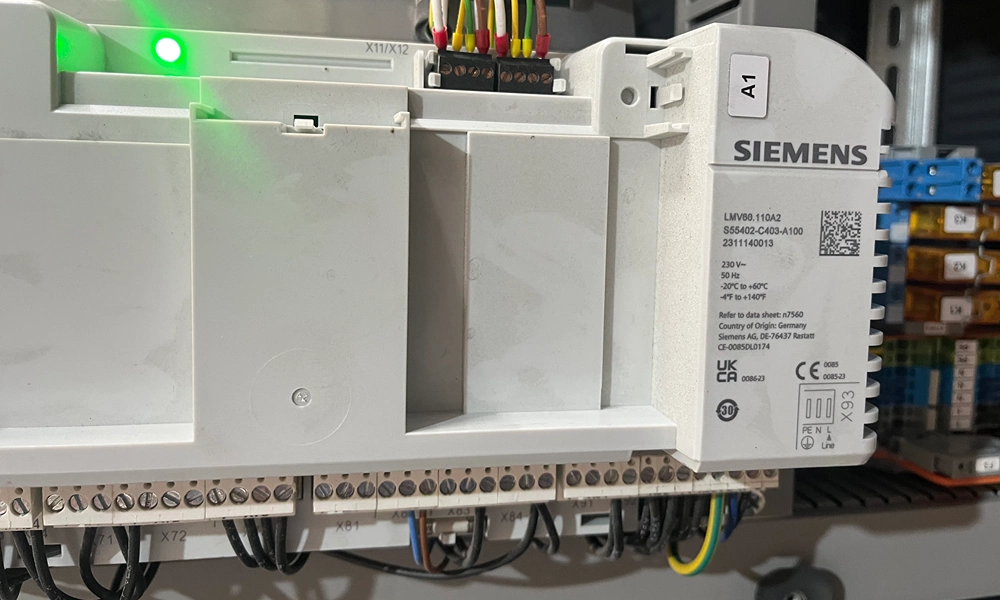
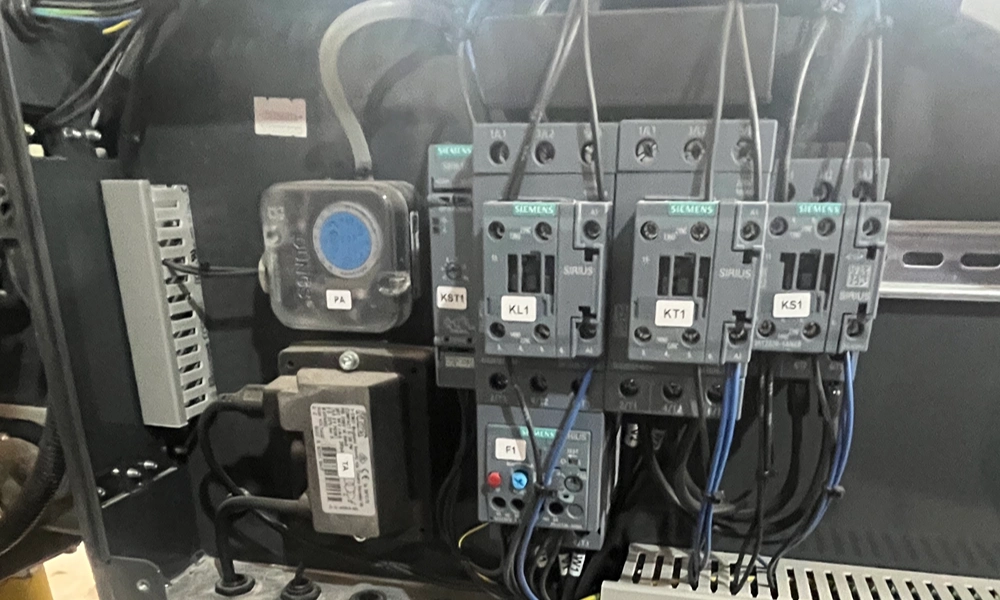
Burner management is a Siemens LMV50.110A2 — the same platform used on European industrial burners. It modulates burner firing rate, monitors flame status, and surfaces fault codes directly on the HMI, instead of leaving the operator guessing.
Every contactor and relay inside the cabinet is labelled to match the electrical drawing we ship with the unit. Two years from now, when the client’s electrician needs to trace a circuit, the labels are still there.
Step 6 — 72-hour hot commissioning, then operator training
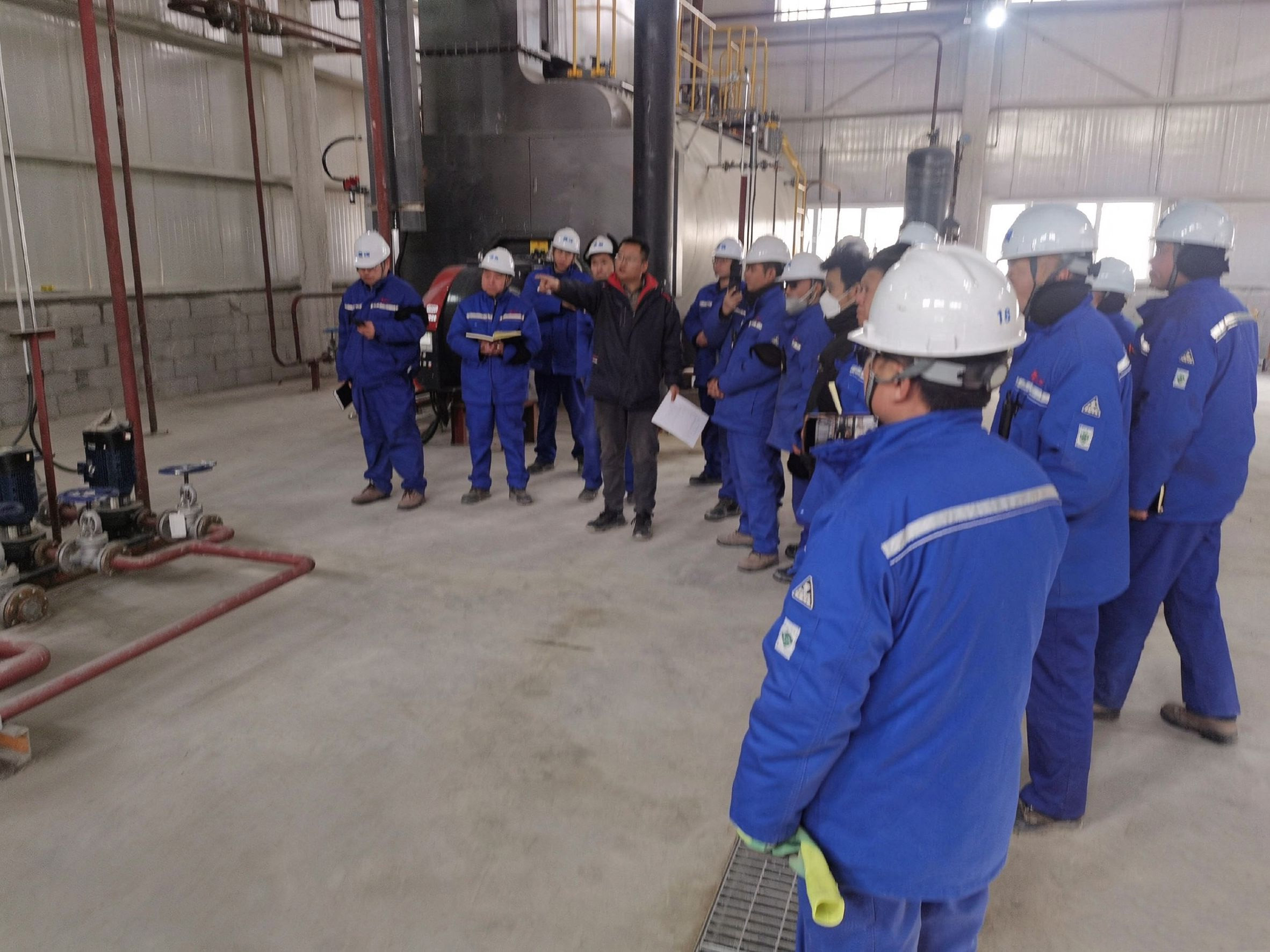
After the boiler has fired continuously for 72 hours on natural gas, we do not simply hand over the keys. We walk Derui’s operating crew through start-up, normal shutdown, emergency shutdown, water-level checks, and what every alarm light on the panel actually means.
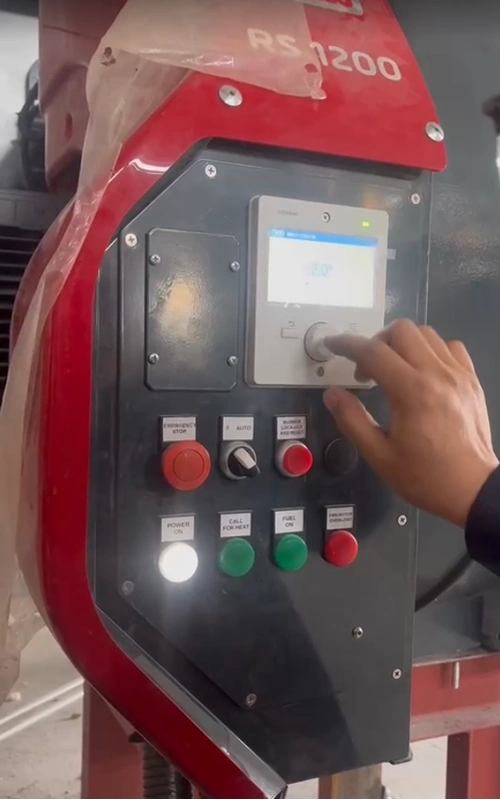
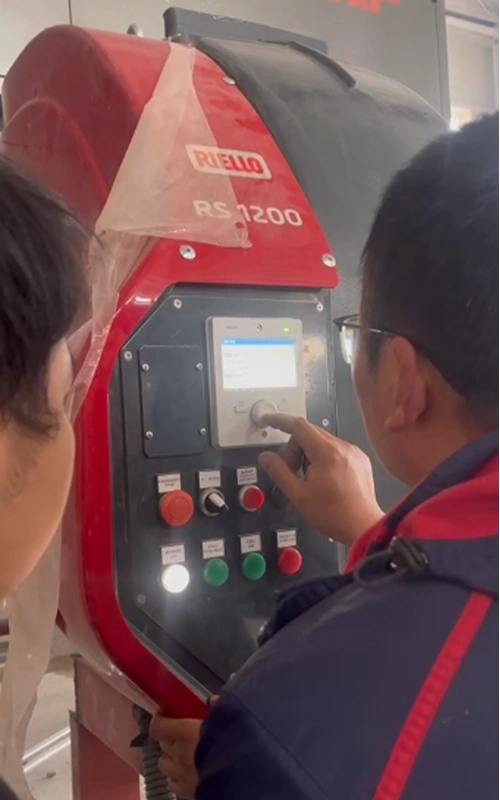
A short clip of the burner modulating during the site test run. For the full 72 hours, the boiler held rated pressure with zero trips.
Why this project matters to us
A biochemical plant in Inner Mongolia is not a Fortune 500. But a client like Derui is exactly the kind of customer we build boilers for: someone who runs the line 24/7, who cannot afford an unplanned shutdown mid-fermentation, and who will remember — for the next 15 years — whether the boiler supplier picked up the phone on a cold winter night when something went wrong.
That is why we showed up in Wuhai, poured the foundation to our drawing, labelled every contactor, and trained the operators until they could execute an emergency shutdown with their eyes closed.
If your plant is starting a new steam project — whether in Inner Mongolia, Southeast Asia, or anywhere in the world — send us your capacity, pressure and fuel requirements. We will come back with a proposal built around the same process you just saw here.